



Skin problems are common in dogs and can range from dry skin and dandruff to allergies, infections, and unusual lumps or bumps. You may notice your dog scratching more than usual, licking their paws, losing hair, or developing irritated areas on their skin. At Sugar River Animal Hospital in Grantham, NH, our veterinary team can help identify the cause of your dog's skin concerns and recommend appropriate treatment to keep them comfortable. Understanding what these changes can mean and when your dog needs veterinary attention is an important part of maintaining their skin health.
What skin conditions can dogs get?
Dogs can develop a variety of skin conditions, including skin infections, dandruff, flea infestations, and allergies that cause itching. They can also develop lumps and bumps that may need to be evaluated by a veterinarian.
What are the signs that my dog has a skin condition that needs attention?
Signs that your dog may have a skin condition include excessive scratching, hair loss, fleas, red or irritated skin, and areas of skin that appear moist or have discharge. New lumps or bumps should also be checked. An unusual odor can be another sign that an infection may be present.
Our team can help identify the cause and determine whether your dog needs treatment. If you have concerns about your dog's skin, contact us at (603) 287-1181 to set an appointment, or email us at [email protected] to schedule an appointment.
Are certain dog breeds more at risk of developing skin conditions?
Yes. French Bulldogs, Bulldogs, certain Pit Bull breeds, German Shepherds, Yorkies, and Spaniels can be prone to skin issues. Longer-haired dogs may also develop skin problems when moisture becomes trapped in their coats. However, any dog can develop a skin condition.
What can my dog's fur or coat tell me about their skin health?
Your dog's coat can provide clues about their skin health. Dry, brittle fur may be related to environmental factors or diet. Dandruff can also indicate that something in the environment or food is affecting the skin and coat.
A reddish-brown color around the feet, legs, or other areas of the body can indicate excessive licking. This may be a sign that your dog is itchy. Lumps or bumps on the skin can also indicate an issue that needs attention.
What are the symptoms and treatments for mange in dogs?
Mange in dogs usually causes significant itching and can occur anywhere on the body, but it classically affects the face. Dogs may develop hair loss that looks almost moth-eaten around the muzzle. The ears, especially the tips, may lose hair and become crusty.
Mange is diagnosed using a skin scraping that is examined under a microscope, where the mites can be identified. Treatment typically involves an oral flea and tick medication that can eliminate the mites.
How do I know if my dog has a bacterial or fungal skin infection?
Bacterial and fungal skin infections are usually diagnosed through cytology, which involves examining skin samples under a microscope. One method is an impression smear, where a slide is pressed against the affected area and then examined.
A tape impression can also be used. Special tape is applied to the affected skin, and the sample is examined under a microscope to help determine what is causing the infection.
I noticed a lump under my dog's skin. What should I do?
 Don't panic if you notice a lump under your dog's skin, but we recommend scheduling an appointment for an examination. During the exam, we will measure the lump and may take an aspirate using a needle to collect cells from it.
The cells can then be examined under a microscope. Based on the findings, the lump may be benign and not require further treatment. However, even benign masses may need to be removed depending on their location, especially if they could become more difficult to remove as they grow. If there is concern for cancer, surgical removal may also be recommended.
How do I know if allergies are the source of my dog's itchy skin?
Determining whether allergies are causing your dog's itchy skin can be difficult. Chronic skin problems can take time to investigate because the underlying cause may be environmental, food-related, or a combination of both.
If the problem occurs only once, it may be caused by an environmental irritant. When symptoms are chronic, we may discuss a food trial or allergy testing to help identify the cause. It can involve a significant amount of investigation and is not always a quick or easy answer.
How can I treat my dog's skin allergies at home?
Over-the-counter antihistamines are not very effective for dogs. They work in less than 10% of dogs, so there are not many effective over-the-counter remedies for treating skin allergies at home.
Can I get my dog allergy tested?
Yes. There are different ways to evaluate allergies in dogs, depending on whether the suspected cause is food or environmental.
For food allergies, we use a hydrolyzed diet. The ingredients are broken down into very small pieces so the dog's immune system cannot recognize the original ingredient source. The food trial takes about eight weeks, and the diet must be fed exclusively. Dogs cannot have outside treats or snacks because giving them other foods resets the trial to day zero.
For environmental allergies, intradermal testing is considered the gold standard. This is usually performed by a veterinary dermatologist. Because veterinary dermatologists can be difficult to find in some areas, we may use an alternative blood test that is sent to a laboratory. The laboratory tests for common environmental allergens in the region.
If allergies are identified, immunotherapy may be developed to help desensitize the dog's immune system. Allergy immunotherapy is typically a lifelong treatment.
Do I always need to go to the vet if my dog has a rash?
No, not every rash requires a veterinary visit. It depends on how widespread the rash is and whether your dog is licking, scratching, or chewing the affected area. These behaviors can make the problem worse.
Dogs have an immune system, so some skin problems may resolve on their own. However, it is important to prevent continued licking, chewing, and scratching so the area has a chance to improve.
Can dog skin tags be removed?
Yes, skin tags can be removed from dogs. However, removal is usually more involved than simply snipping them off with scissors because skin tags often have a blood supply.
Does cryotherapy work for dog skin tags?
Yes, cryotherapy can be used to remove skin tags. However, we do not have cryotherapy equipment at our practice.
Are there any medications I can give my dog to help with skin problems?
If your dog's skin problems are caused by environmental factors, prescription medications may help, especially when itching is present. The appropriate medication depends on the underlying cause of the skin problem.
Where should I go for guidance on food or shampoo for a dog with skin allergies or dry, sensitive skin?
We recommend talking to your veterinarian. There are many over-the-counter shampoos and foods, but very few have research to support their claims.
Veterinary shampoos are supported by research and are usually selected for your pet's specific skin problem. They may help restore the skin barrier. Some over-the-counter products, even those containing oatmeal, may not provide the intended skin benefits and can strip away natural oils while simply washing the coat.
Is there anything I can do at home to help my dog's dry skin?
Fish oil can be helpful for dogs with dry skin. However, dogs need a much higher dose of fish oil than humans, and human fish oil products do not have the same ratio of omega-3, omega-6, and omega-9 fatty acids that dogs need. We recommend using a product formulated for dogs and discussing the appropriate amount with your veterinarian.
What do I do if I see a tick on my dog's skin?
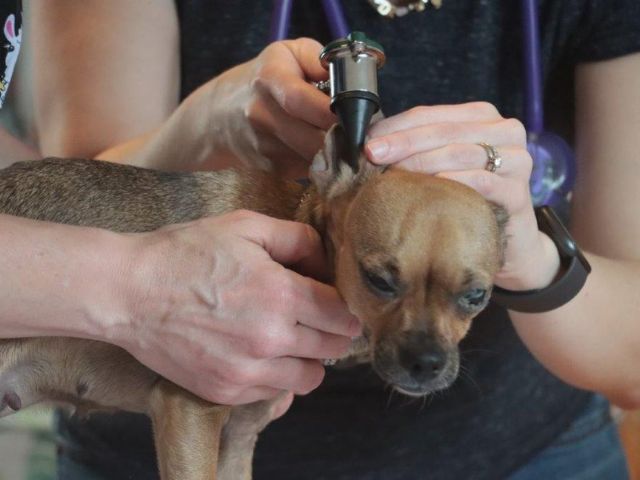 If you see a tick on your dog, don't panic. Try to grip the tick at the base, where it is attached to your dog, and pull it off. Tick twisters are also available and can help you grasp and remove the tick.
People often worry that they did not remove all the mouthparts or that part of the tick was left behind. There is usually no need to rush to the veterinary clinic for this, because there is not much we can do about the remaining parts. Your dog may develop a small raised bump at the site, which will typically go away in about seven to ten days.
Even if the tick's head remains attached, removing its body prevents it from continuing to feed. You can dispose of the tick by flushing it down the toilet or placing it in alcohol to kill it.
What can I do at home to prevent the development or progression of skin problems in my dog?
One of the biggest controllable causes of skin problems is moisture trapped in a dog's coat. Dogs that get wet and are not dried properly can develop skin problems because moisture becomes trapped in their hair.
If your dog swims or spends time outside, make sure to dry them thoroughly when they come inside. This also applies during winter when dogs get wet from snow. Proper drying can help prevent skin infections related to moisture.
If you notice a skin problem that does not seem severe, immediately prevent your dog from licking, chewing, or scratching the area, since those behaviors can make it worse. If the problem is not resolving within a few days or is getting worse, your dog should be examined.
Dogs with chronic skin problems may have an underlying allergy that needs to be investigated. Identifying the cause allows your veterinarian to recommend appropriate medications to help manage allergies and prevent recurring infections.
What are the signs of skin cancer in dogs and how is it treated?
There is no specific sign that identifies skin cancer in dogs. Any lump or bump has the potential to be cancerous, so a new lump should be examined by a veterinarian and may need to be aspirated.
The cells are examined under a microscope to determine whether further steps are needed. Typically, if a lump is cancerous, surgical removal is the treatment.
How often should I bathe my dog if they have a skin condition?
How often you should bathe your dog depends on the skin condition. For the shampoo and mousse products we use, we typically shampoo the dog on the first day and then follow with a leave-in mousse regimen for several weeks.
Are there specific shampoos or topical treatments recommended for dogs with skin issues?
Yes. We recommend prescription shampoos and mousses for dogs with skin issues. These products can help restore the skin barrier and reduce the bacterial load on the skin.
How can I prevent my dog from licking or scratching their skin excessively?
Excessive licking or scratching usually means there is an underlying cause. If it is a chronic problem, your dog should be examined because it may be related to allergies.
In general, using a cone, a T-shirt, or boxer shorts to cover the affected area can help prevent your dog from licking, chewing, or scratching it. If your dog is constantly chewing at their feet, it is most likely allergy-related.
How do I know if my dog needs a dermatologist?
This is a discussion to have with your veterinarian. Most skin conditions can be handled by your general practitioner. However, if the case is unusual or the skin problem is not resolving with traditional treatment methods, your veterinarian may recommend seeing a veterinary dermatologist.
Some skin conditions may improve with simple changes at home, while others require veterinary testing and treatment to address the underlying cause. If your dog is experiencing ongoing itching, irritation, hair loss, or a skin problem that isn't improving, the team at Sugar River Animal Hospital is here to help. Contact us at (603) 287-1181 or [email protected] to schedule an appointment and discuss your dog's skin concerns.
Yes. Allergies are a common cause of chronic itching and skin irritation in dogs. Environmental allergies, food allergies, or a combination of both may contribute to ongoing skin problems. Your veterinarian can help determine the underlying cause and recommend an appropriate treatment plan.
Frequent licking or chewing of the paws can be a sign of allergies or another skin problem. If your dog is constantly licking their feet, chewing their skin, or scratching, it is worth having them evaluated by your veterinarian to identify the cause.
Some over-the-counter antihistamines may be used in dogs, but they are not effective for every dog or every type of allergy. Talk with your veterinarian before giving your dog medication to determine whether it is appropriate and what dose is safe.
A food allergy trial typically lasts about eight weeks. During this time, your dog must eat only the recommended diet without treats, snacks, or other foods. Even a small amount of another food can interfere with the trial and may require starting over.
Bathing may help certain skin conditions, but the right shampoo and bathing schedule depend on what is causing the irritation. Some veterinary shampoos and topical treatments are designed to help restore the skin barrier and reduce bacteria. Ask your veterinarian which products are appropriate for your dog's condition.
Have your veterinarian examine any new or changing lump or bump. Your veterinarian may measure it and collect a sample using a small needle to examine the cells under a microscope. This can help determine whether the lump needs further testing or treatment.
Yes. Excessive scratching, licking, and chewing can irritate the skin and contribute to additional problems, including bacterial infections. If your dog has red, irritated, wet, or uncomfortable areas that are getting worse, contact your veterinarian.
Schedule an appointment if your dog has persistent itching, hair loss, irritated skin, unusual odors, new lumps or bumps, or areas that are not improving. Skin problems that continue or return may need testing to identify the underlying cause and determine the best treatment.